

Beyond Licensing: KMPDC’s Expanding Grip on Kenya’s Health Sector

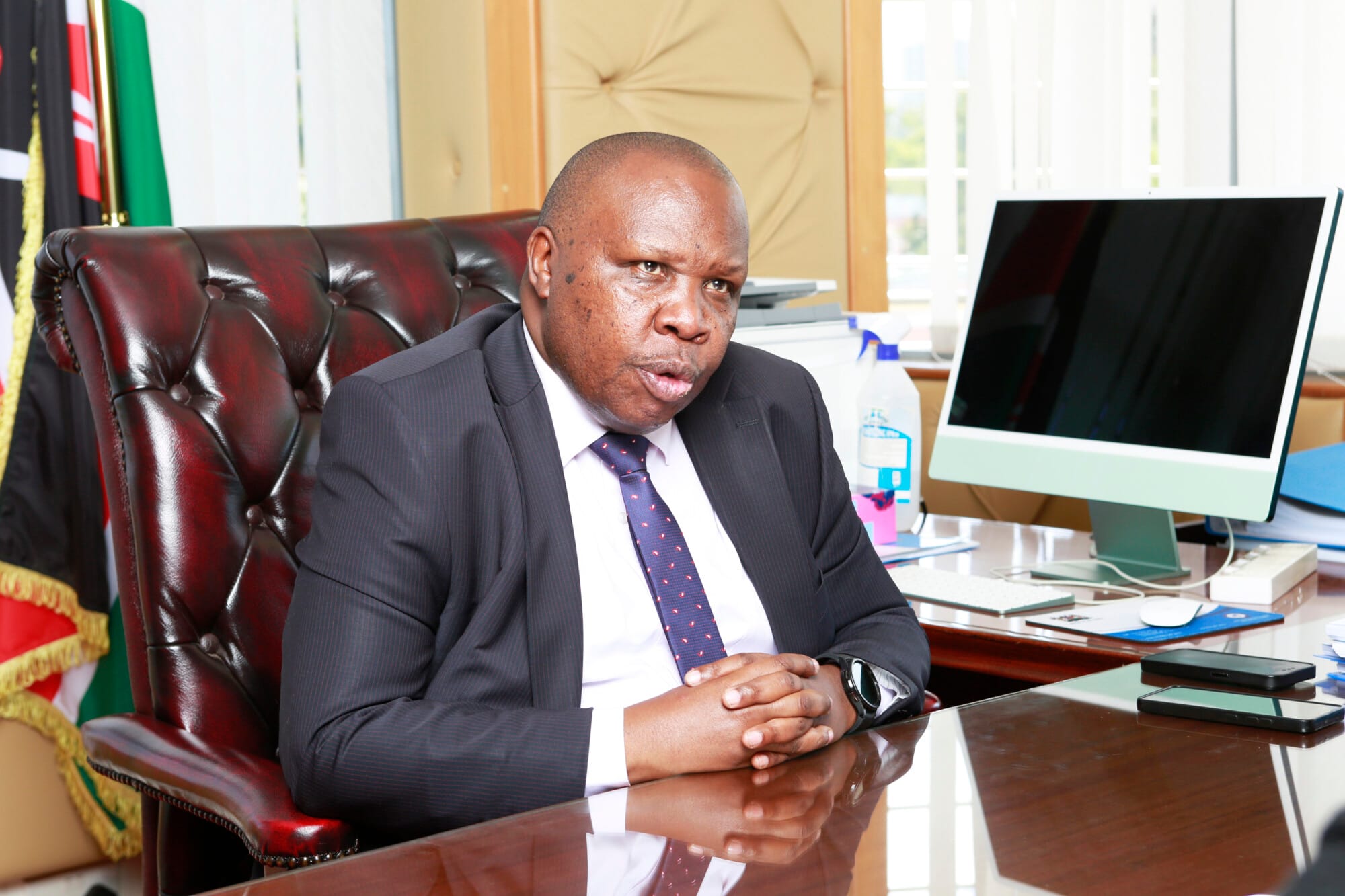
Kenya’s healthcare system is undergoing a profound transformation driven by shifting policy dynamics, rapid technological advancements and growing demand for quality accessible care. At the centre of this evolution is the Kenya Medical Practitioners and Dentists Council (KMPDC), an institution that has steadily expanded its role from a traditional licensing authority into a powerful regulator shaping standards, discipline and innovation across the sector. From enforcing strict ethical guidelines and professional accountability to navigating the complexities of devolution and healthcare workforce shortages, the Council is redefining effective regulation while embracing digital transformation. With a vision anchored on balancing innovation with patient safety, KMPDC Chief Executive Officer Dr. David Gicheru Kariuki is leading the Line in Shaping Kenya’s Healthcare Future as he narrates to Corporate Watch Magazine’s Swao Mururi.
The Kenya Medical Practitioners and Dentists Council (KMPDC) has steadily entrenched itself as one of the most consequential institutions in safeguarding the quality, integrity and future of healthcare in Kenya.
From its origins as a statutory licensing authority, the Council has evolved into a multifaceted regulator navigating a rapidly shifting healthcare ecosystem defined by devolution, digitization, and global integration. At the centre of this transformation is the regulator’s Chief Executive Officer Dr. David Gicheru Kariuki, whose leadership is redefining the scope and ambition of healthcare regulation in the country.
In an exclusive interview, Dr. Kariuki offers a comprehensive view of a sector at a crossroads; confronting deep structural challenges while embracing unprecedented technological and policy opportunities.
From Licensing to Systems Regulation
Established under the Medical Practitioners and Dentists Act in 1977 and operationalized in 1978, KMPDC’s original mandate focused on regulating the training, licensing, and practice of medical practitioners and dentists. Over time, this scope has expanded significantly.
Today, the Council oversees private healthcare facilities, accredits training institutions, and enforces professional discipline across the sector. It regulates not only doctors and dentists, but also community oral health practitioners, ensuring uniformity in standards.
“We are no longer just a licensing body,” Kariuki explains. “We are a standards authority, a disciplinary institution and a strategic partner in strengthening healthcare systems across the country.”
This expanded mandate reflects the growing complexity of healthcare delivery, where regulation must keep pace with innovation, decentralized governance and rising public expectations.

Global Standards and ISO Accreditation
Among KMPDC’s most notable achievements is attaining ISO accreditation, making it the only health regulator for professionals in Kenya to achieve this benchmark.
ISO/IEC17024:2012 is an internationally recognized standard that ensures organizations responsible for certifying professionals follow transparent, fair and competency-based assessments.
By achieving this accreditation, KMPDC guarantees that all medical practitioners, dentists and community oral health officers in Kenya meet rigorous benchmarks.
This not only improves the quality of healthcare within the country but also ensures that Kenyan healthcare professionals are internationally recognized, making it easier for them to work abroad with reduced certification hurdles.
For Dr. Kariuki, this milestone goes beyond institutional prestige. “ISO accreditation is a guarantee of quality, transparency and accountability in how we regulate the sector. This not only boosts the credibility of our licensing process but also ensures that our healthcare professionals have a competitive edge in international practice, allowing them to serve beyond our borders with nominal barriers,” he notes.
The accreditation has had far-reaching implications, practitioners regulated by KMPDC are now recognized in over 150 jurisdictions, opening doors for employment, collaboration and knowledge exchange.
However, this global recognition presents a paradox. “While it enhances opportunities for our professionals, it also raises legitimate concerns about brain drain. Retention must now become a national priority,” Kariuki cautions.
Ethics, Discipline and Public Trust
At the core of KMPDC’s regulatory philosophy lies a firm commitment to ethics and professional discipline. Through its Guidelines for Healthcare Professionals, the Council outlines strict expectations on patient care, confidentiality, informed consent and professional conduct.
“Medicine is not just about knowledge and skill, it is fundamentally about ethics, discipline, and accountability,” Kariuki emphasizes.
The Council enforces these standards through a structured disciplinary framework that investigates complaints, conducts hearings, and imposes sanctions where necessary. Yet, Kariuki is keen to stress that regulation is not purely punitive.
“Our aim is not only to discipline but to guide practitioners and continuously improve standards across the profession.” He mentions. This balance between enforcement and mentorship is critical in sustaining public trust in the healthcare system.

Navigating Complexities of Devolution
The advent of devolution under Kenya’s 2010 Constitution fundamentally altered the healthcare landscape, transferring service delivery to 47 county governments. For KMPDC, this introduced both operational challenges and opportunities for collaboration.
“At the beginning, there were overlaps and misunderstandings around roles, particularly in licensing and inspections,” Dr. Kariuki recalls.
Over time, sustained engagement has yielded a more coherent working relationship between the Council and county governments. “Today, we work closely with counties to ensure healthcare services are both accessible and compliant with national standards,” he adds.
KMPDC continues to conduct nationwide inspections, often using its own resources, to maintain independence and consistency. Facilities found to be non-compliant are guided through corrective measures, with enforcement applied where necessary.
The Council has also strengthened partnerships with universities, training institutions, and faith-based organizations, recognizing their critical role in service delivery, particularly in underserved areas.
The Healthcare Workforce Deficit
Despite regulatory progress, Kenya’s healthcare system continues to grapple with a significant workforce deficit. According to Dr. Kariuki, the country requires approximately 55,000 doctors but currently has only about 17,000.
“This is fundamentally an investment challenge,” he states. The shortfall is most acute in rural and marginalized regions, where limited staffing strains service delivery and compromises quality of care. While Kenya has expanded its training capacity, absorption and retention remain key bottlenecks. “Training alone is not enough. We must invest in infrastructure, equipment, and incentives that retain professionals within the system,” he emphasizes.
Regionally, cooperation within the East African Community has improved regulatory alignment and facilitated professional mobility, positioning Kenya as a leader in setting standards.
Digitization and the Rise of Digital Health
Digitization has emerged as a cornerstone of KMPDC’s operational and policy framework. Key services, including licensing, facility accreditation, and practitioner verification, have been migrated online.
“Digitization has decentralized our services. Practitioners no longer need to travel to Nairobi to access regulatory services,” Dr. Kariuki explains.
This transition has enhanced efficiency, reduced bureaucratic delays, and improved transparency. Importantly, it has empowered patients to verify practitioners online, strengthening accountability.
Telemedicine: The Next Frontier
As digital health gains traction, telemedicine is increasingly redefining healthcare access in Kenya. While still in its early stages, the technology holds transformative potential.
“Telemedicine is not something we can avoid, it is something we must embrace and regulate effectively,” asserts the KMPDC CEO who holds an MBA in Healthcare Management from Strathmore University.
Driven by high mobile phone penetration, telemedicine; particularly mobile health (mHealth), is expanding access to care in remote and underserved areas. Patients can now consult doctors, receive prescriptions, and access medical advice without physical visits.
For vulnerable populations, including the elderly and chronically ill, this shift is particularly significant. Remote monitoring and virtual consultations are reducing the burden of travel while enabling continuous care. Telemedicine is also enhancing system efficiency. The adoption of Electronic Health Records (EHRs) has streamlined patient data management, improved diagnostics, and reduced congestion in health facilities.
However, Dr. Kariuki acknowledges that challenges remain. Infrastructure gaps, particularly in rural areas, limit connectivity. Digital literacy disparities risk excluding certain populations, while data privacy concerns require robust safeguards.
Legislative frameworks such as the Health Act 2017, the Digital Health Act, and the Data Protection Act are providing a foundation for regulating this space. According to the Chief Executive Officer, KMPDC is actively developing guidelines to ensure telemedicine and emerging technologies are adopted responsibly.
“Innovation without regulation can be risky. Our role is to strike a balance between enabling progress and protecting patient safety,’ he says.
Technology, Innovation and the Future of Care
Beyond telemedicine, global advancements such as artificial intelligence and robotic surgery are reshaping healthcare delivery. While still nascent in Kenya, Dr. Kariuki views their adoption as inevitable.
“The future of medicine is technology-driven. Kenya must invest in modern systems to remain competitive,” he says. This according to the CEO who holds a Master’s in Obstetrics and Gynaecology, will require coordinated investment in specialist training, infrastructure, and regulatory frameworks capable of accommodating rapidly evolving technologies.
Sustained Investment and Commitment
Despite the challenges, Dr. Kariuki remains optimistic about Kenya’s healthcare trajectory. “We have the talent, the institutions, and the regulatory framework. What we need is sustained investment and commitment,” he urges.
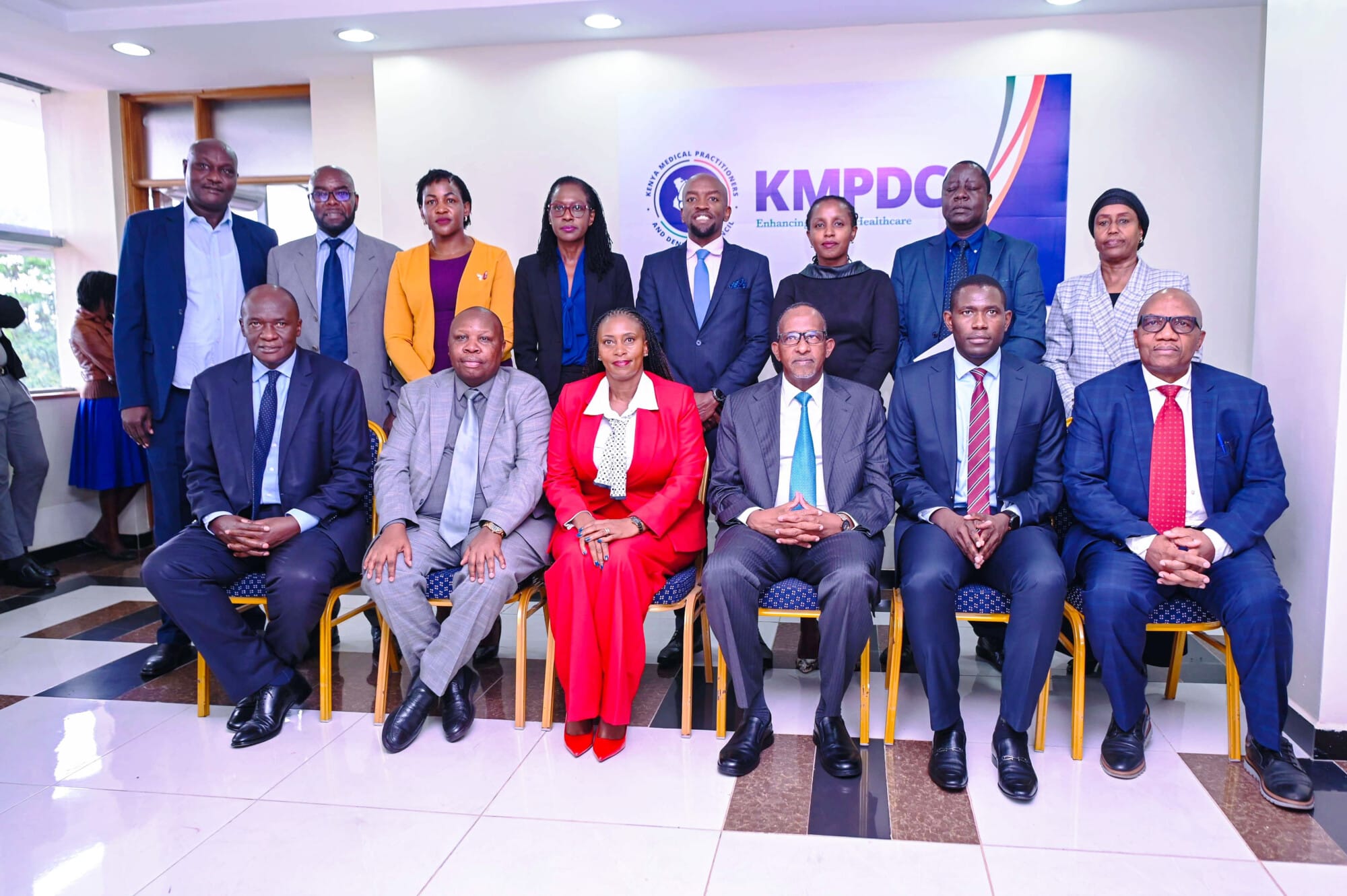
From enforcing ethical standards and strengthening discipline to embracing digital transformation and global benchmarks, KMPDC stands at the centre of Kenya’s healthcare evolution.
Under Dr. Kariuki’s stewardship, the Council is not merely regulating the sector; it is actively shaping its future, ensuring that quality, accountability, and innovation remain the defining pillars of healthcare in Kenya.
