

Government Rejects Pension Merger Over Multibillion-Shilling Fiscal Burden


The Kenyan government has rejected calls to merge the country’s two public-service pension schemes, warning that bringing the old civil service system into the newer contributory arrangement could saddle taxpayers with a multibillion-shilling bill and reopen the fiscal pressures that prompted pension reforms in the first place.
The dispute has emerged as public-sector retirees press the government to dismantle what they regard as an inequitable two-tier pension system.
The Kericho branch of the Kenya National Association of Public Service Pensioners has challenged the continued operation of separate pension arrangements, arguing that the distinction between workers covered by the old scheme and those enrolled in the Public Service Superannuation Scheme (PSSS) is discriminatory.
The pensioners have called for the merger of the old, non-contributory defined-benefit scheme with the PSSS, which was introduced as part of a broader effort to place public pensions on a funded and sustainable footing.
But the Public Service Superannuation Fund (PSSF) and the Ministry of Public Service and Human Capital Development say such a merger would be neither simple nor inexpensive.
Jane Imbunya, the Principal Secretary for Public Service and Human Capital Development, said the proposal would require Parliament to confront billions of shillings in existing pension liabilities, overhaul the legal framework governing the schemes and ensure that the accrued rights of both serving and retired public servants were protected.
“The two schemes were created under different policy and legal frameworks and merging them would come at a huge cost to taxpayers,” Ms. Imbunya said.
She described the current dual structure as an intentional transitional arrangement created by pension reforms designed to prevent the public retirement system from becoming an ever-expanding burden on the national budget.
Kenya’s original civil service pension system dates to 1946. It was financed entirely by the government, with employees making no contributions and no investment fund established to meet future pension obligations.
Over time, the arrangement became an open-ended liability for the Treasury, with pension payments competing with other demands on the national wage bill and public finances.
That pressure prompted Treasury Circular No. 18 of 2010, which directed public-sector pension schemes toward funded defined-contribution arrangements.
The PSSS was subsequently established under the Public Service Superannuation Scheme Act and began operations on Jan. 1, 2021.
The transition divided public servants largely according to age. Employees younger than 45 were automatically enrolled in the new scheme, while those aged 45 and above were allowed to opt in between January and March 2021. Those who did not make the switch remained under the old defined-benefit arrangement, which was closed to new entrants.
The PSSF argues that the distinction is fundamental rather than administrative.
Jonah Aiyabei, the Fund’s chief executive, said members of the PSSS contribute 7.5 percent of their monthly basic salaries, while the government contributes an additional 15 percent.
The legacy scheme has no comparable funding mechanism. Its obligations are met on a pay-as-you-go basis from the Consolidated Fund.
“The contributory and non-contributory schemes operate under different legal and statutory regimes,” Mr. Aiyabei said. “The old scheme is unfunded, while PSSF is funded through contributions from employees and the Government.”
As of June 30, 2026, the PSSS had 529,635 members, according to the Ministry of Public Service and Human Capital Development.
The government also argues that the shift to a funded pension model has helped deepen Kenya’s pool of long-term domestic capital. Retirement benefits assets stood at about Sh1.7 trillion in June 2023, underscoring the growing role of pension funds in the country’s financial markets and investment economy.
But the central obstacle to any merger is the unfunded liability accumulated under the old scheme.
The PSSF says that moving those obligations into a funded system would require Parliament to make explicit fiscal provision to capitalise the liabilities. Options could include direct financing from the Consolidated Fund, the issuance of government bonds or a structured, multiyear funding programme approved by the Treasury and the Retirement Benefits Authority.
The Fund has also warned that pension rights already earned by workers cannot simply be converted into defined-contribution accounts without proper valuation and legal safeguards.
Accrued benefits would have to be independently assessed by a qualified actuary and either credited to individual defined-contribution accounts on an actuarially equivalent basis or placed in a ring-fenced defined-benefit fund until the outstanding obligations are extinguished.
The PSSF has cautioned that converting accrued defined benefits without the consent of affected members or equivalent compensation would raise constitutional concerns.
A merger would therefore require substantial legislative changes, including amendments to, or repeal of, the law governing the legacy pension scheme and corresponding changes to the PSSS Act.
It would also require extensive consultation with public servants, pensioners, trade unions and other stakeholders, as well as compliance with labour and retirement-benefits legislation.
Still, the government’s rejection of a merger does not amount to a dismissal of pensioners’ grievances.
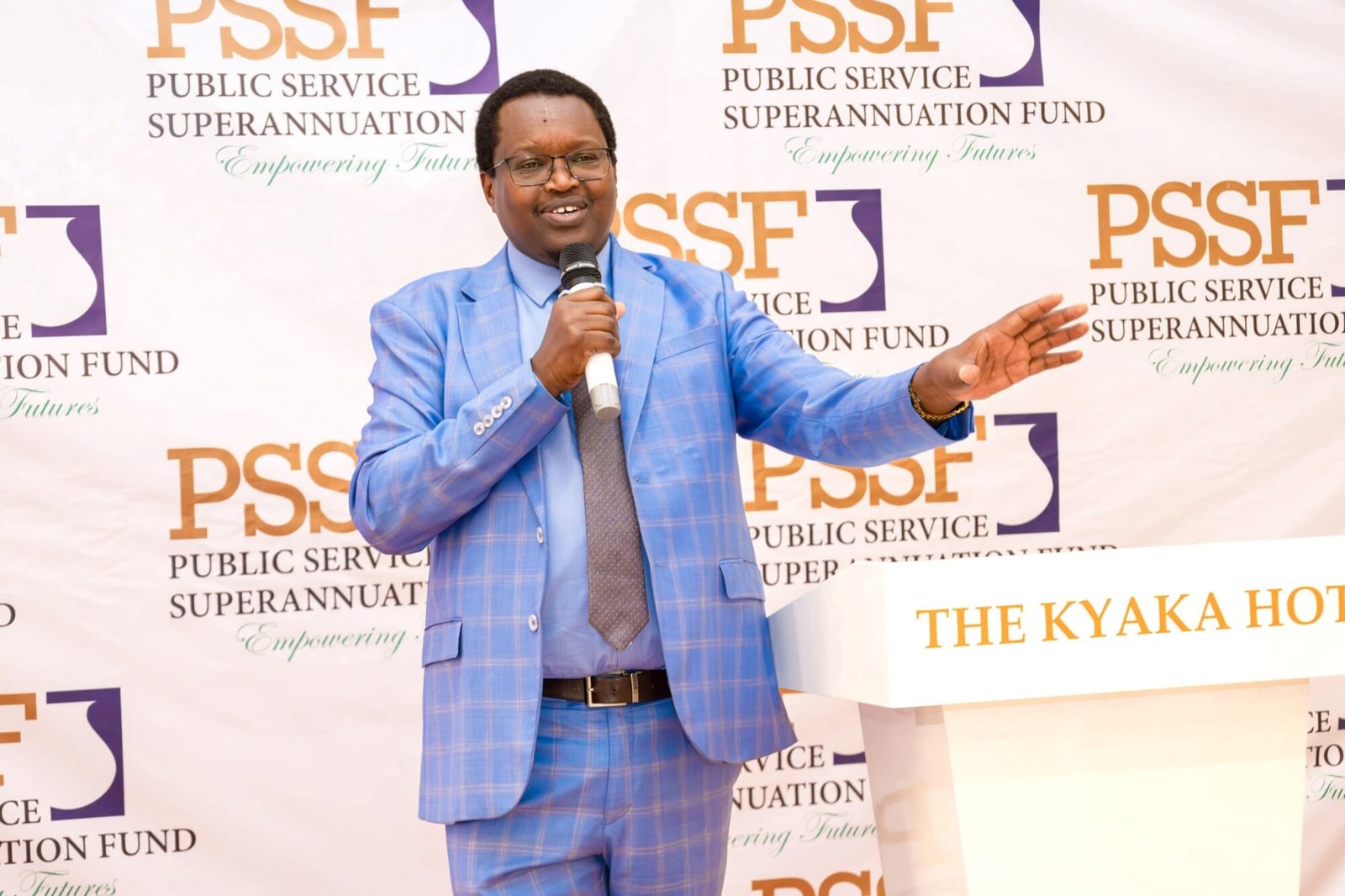
The PSSF acknowledged that retirees face legitimate concerns over the erosion of pension incomes by inflation, the frequency and adequacy of pension adjustments and administrative challenges in accessing their benefits.
An actuarial assessment of the legacy non-contributory scheme was conducted by the Treasury as of June 30, 2024. The Fund said responsibility for deciding how to implement the assessment’s recommendations rests with the Treasury.
For now, the government is maintaining the two-tier system, arguing that the cost of dismantling it would have to be weighed against the very fiscal pressures that led Kenya to reform public-sector pensions in the first place.
